跳到内容
跳到内容 
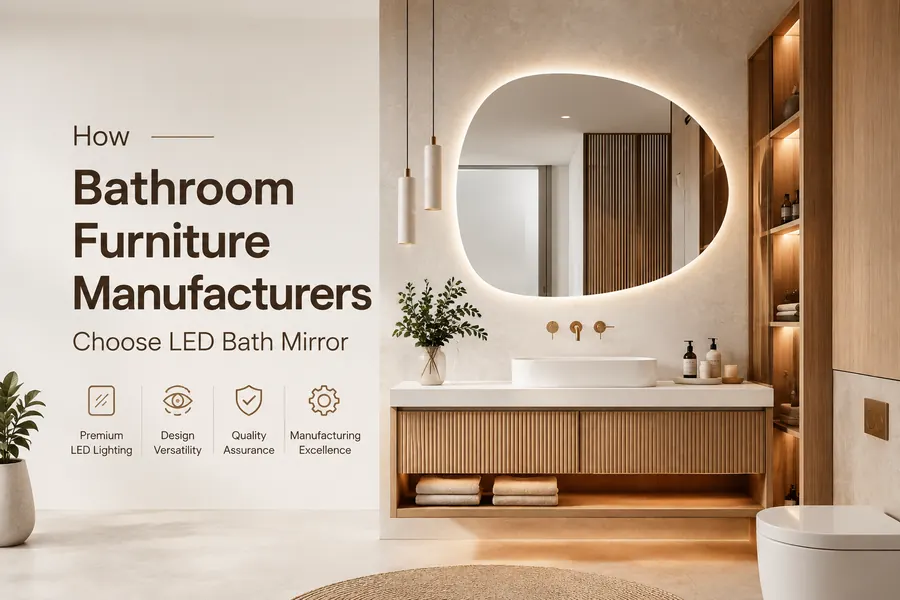
Bathroom furniture manufacturers should choose LED bath mirrors around the vanity line, target market, and sales plan. The mirror should match the cabinet in size, shape, finish, lighting, and installation.
For bulk orders, appearance is only one part of the decision. Buyers also need to check voltage, certifications, custom options, sample quality, packaging, and repeat-order control.
This guide is for bathroom furniture factories, bathroom vanity manufacturers, and private-label brands. It explains how to build an LED mirror range that works with an existing bathroom vanity collection.
What Should Bathroom Furniture Manufacturers Confirm First
Before asking for a quote, confirm your bathroom vanity collection and mirror requirements. This gives the supplier enough information to quote, make samples, and plan production with fewer changes.
Define the Vanity Collection and Target Market
Start with the bathroom furniture you already sell.
List the main vanity sizes, sink layouts, price levels, and target markets. A furniture factory may sell 600 mm, 750 mm, 800 mm, 900 mm, and 1200 mm vanities.
You do not always need a different mirror for every cabinet. Several vanity models may share one mirror size. This can cut inventory, packaging types, and repeat-order work.
Also define where you plan to sell the mirrors. A hotel range may need simple controls and easy replacement. A retail range may need more shapes and smart functions.
Before contacting a supplier, prepare your:
- Vanity catalogue
- Cabinet dimensions
- Product drawings
- Target market
- Expected order quantity
This gives the mirror factory a clear starting point.

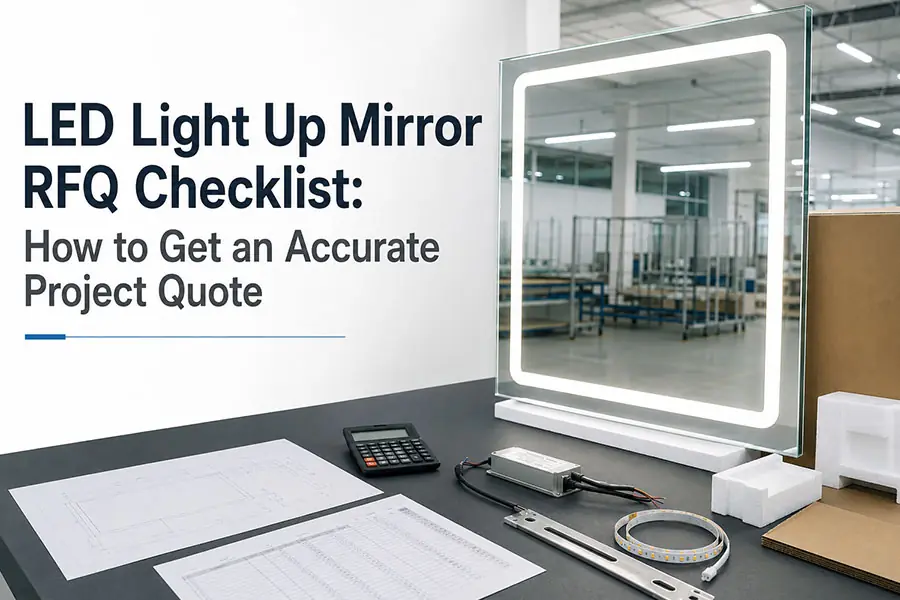
Prepare the LED Mirror Requirements
A clear specification sheet makes the first quote more useful. It also lowers the risk of making the wrong sample.
| Specification | Buyer Should Confirm |
|---|---|
| Size | Width, height, glass thickness |
| Shape | Rectangle, round, arch, capsule or custom |
| Lighting | Front-lit, backlit or both |
| Light | CCT, CRI and dimming |
| Functions | Anti-fog, memory, Bluetooth or display |
| Electrical | Voltage, switch type and cable position |
| Frame | Material, color and finish |
| Compliance | Required certification and IP rating |
| Custom Work | Logo, manual, carton and labels |
| Order | Sample quantity and bulk quantity |
Send this information before asking for a final price. A complete RFQ makes it easier to compare suppliers on the same basis.
Real Project: LED Mirrors for a Bulgarian Bathroom Furniture Factory
A real Bulgarian project shows why furniture factories should test LED mirrors before a large order. The buyer first checked materials, functions, certifications, and custom sizes. It then tested several samples, added new mirror styles, and moved into bulk purchasing.
The customer is a local bathroom furniture manufacturer in Bulgaria. Its managing director handled the sourcing work. The company also has its own glass workshop.
It needed finished LED bathroom mirrors to sell with its bathroom cabinets. The company contacted Shein Mirror to develop a custom LED mirror range.

Initial Inquiry: Technical Requirements for a Custom LED Mirror Range
The buyer had four main concerns: customization, bathroom use, EU compliance, and order terms.
The company needed mirrors made to its own drawings and non-standard sizes. It also asked about glass quality because the products would stay in humid bathrooms.
The required specifications included:
- 4 mm and 5 mm copper-free silver mirror
- Anti-corrosion mirror coating
- Anti-fog function
- Custom shapes and dimensions
- CE certification
- IP44 rating
- OEM and ODM support
- MOQ of 50 pieces
- Confirmed production lead time
The customer did not want a stock mirror with a new label. It needed a mirror range that could fit its own furniture line.
Sample Phase: Test Custom Sizes and Expand the Product Range
The buyer tested samples before locking the bulk order.
Different sizes and specifications were checked one by one. These included a custom 45 cm mirror and a 350 × 520 mm mirror. The buyer also compared 3 mm plain mirrors with LED models.
The sample range covered:
- Three-color lighting
- Anti-fog heating
- Round mirrors
- Custom-shaped mirrors
- Bluetooth
- Temperature displays
- Mirror cabinets
The local Bulgarian market had many basic mirrors with limited functions. The buyer saw more room for smart mirrors and higher-spec models.
This changed the project. The customer started with basic mirror needs but became interested in a wider product range.
One 45 cm sample also showed a size error. The measured size was larger than the approved dimension. We then added another size check before releasing later pre-production samples.
This is one reason furniture factories should test each key size before mass production.

From Sample Approval to a Two-Container Bulk Order
The order grew in stages.
The process was:
Samples → Small repeat order → Specification changes → Pre-production samples → Bulk production
The buyer kept basic models and smart models as separate price levels. It also changed sizes, light widths, frames, functions, and quantities during order review.
The final project included custom packaging details such as:
- Blank outer cartons
- Fragile marks
- Mirror-size labels
- Bulgarian product labels
- Bulgarian installation manuals
- Custom product model numbers
For one round mirror, the buyer also wanted to test two rear-panel designs. We made both pre-production versions so the customer could review them before choosing the final structure.
After the sizes, functions, labels, packaging, and samples were approved, the customer moved to a two-container bulk order.
How to Match LED Mirrors With a Bathroom Vanity Collection
Match the LED mirror to the vanity in size, shape, and finish. Do this during product planning, not after the cabinet design is finished.
Match Mirror Size With Vanity Size
Start with the vanity width and basin layout.
A single-sink vanity often uses one centered mirror. A double-sink vanity can use one wide mirror or two separate mirrors.
Also check:
- Basin centerline
- Faucet height
- Wall clearance
- Light position
- Mounting space
For a large vanity range, try to standardize mirror sizes. One mirror may fit more than one cabinet width.
This helps reduce:
- Mirror SKUs
- MOQ pressure
- Stock levels
- Packaging types
- Replacement stock
A standard size plan also makes future orders easier.
Match Mirror Shape and Frame Finish
Mirror shape should follow the design language of the vanity line.
Common options include:
- Rectangle
- Round
- Arch
- Capsule
Frame color also matters. Common finishes include matte black, brushed gold, chrome, and gunmetal.
Do not match colors by name alone. One supplier’s “brushed gold” may look different from another supplier’s finish.
For better control, send the mirror factory a real cabinet handle, faucet sample, or finish swatch. Approve one physical frame sample and keep it as the color reference for future orders.

How to Choose LED Lighting and Mirror Functions
Choose lighting and functions based on the price level of the vanity line. Basic furniture does not need every smart feature. Premium furniture may need more light control and added functions.
Front-Lit, Backlit or Front-and-Backlit
Backlit mirrors create a soft glow around the mirror. They work well for basic and standard collections.
Front-lit mirrors send more light toward the user. This helps with shaving, makeup, and other daily tasks.
Front-and-backlit mirrors combine both effects. They often fit premium vanity lines.
Keep the lighting structure consistent within each collection. This makes production and repeat ordering easier.
Read Related Article: Backlit Mirrors for Bathrooms: Are Good for Makeup?

Color Temperature, CRI and Dimming
Common LED mirror color temperatures include:
- 3000K warm white
- 4000K neutral white
- 6000K cool white
Some mirrors allow the user to switch between all three.
CRI also matters because it affects how skin tones and colors look in the mirror. Dimming gives users more control over brightness.
For furniture manufacturers, repeat-order consistency matters as much as the first sample. A mirror bought next year should not look warmer or darker than the first production batch.
Anti-Fog, Memory and Control Options
Anti-fog heating helps keep the mirror clear after a hot shower.
Common control options include:
- Touch button
- Wall switch
- Motion sensor
Memory functions can keep the last light level or color setting after the power is turned off.
Hotel and project customers often prefer simple controls. Retail brands may accept more touch functions.
Choose the control system before the sample stage. It affects the electronics, back structure, and user experience.
Which Smart Features Are Worth Adding
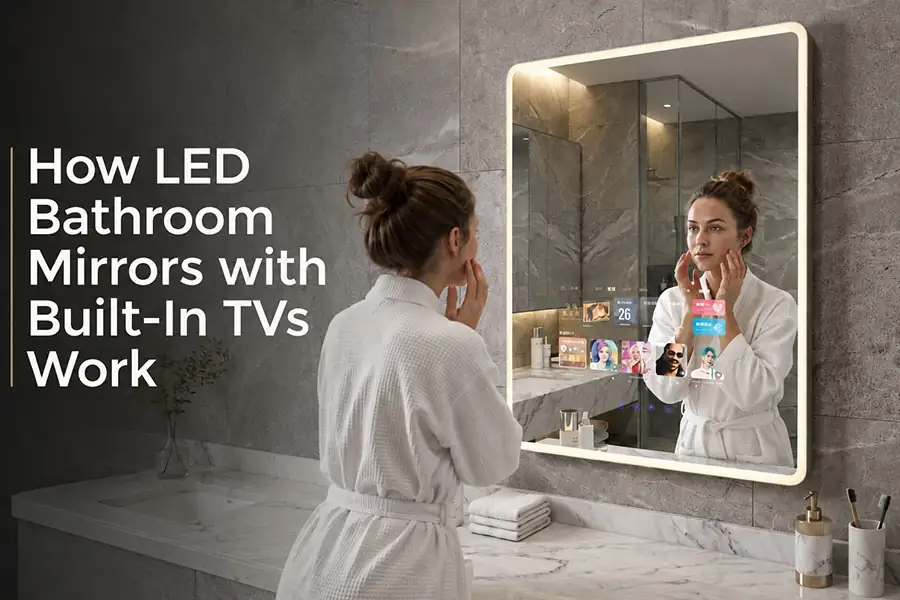
Bluetooth, clocks, temperature displays, and Wi-Fi weather screens can help a mirror stand out.
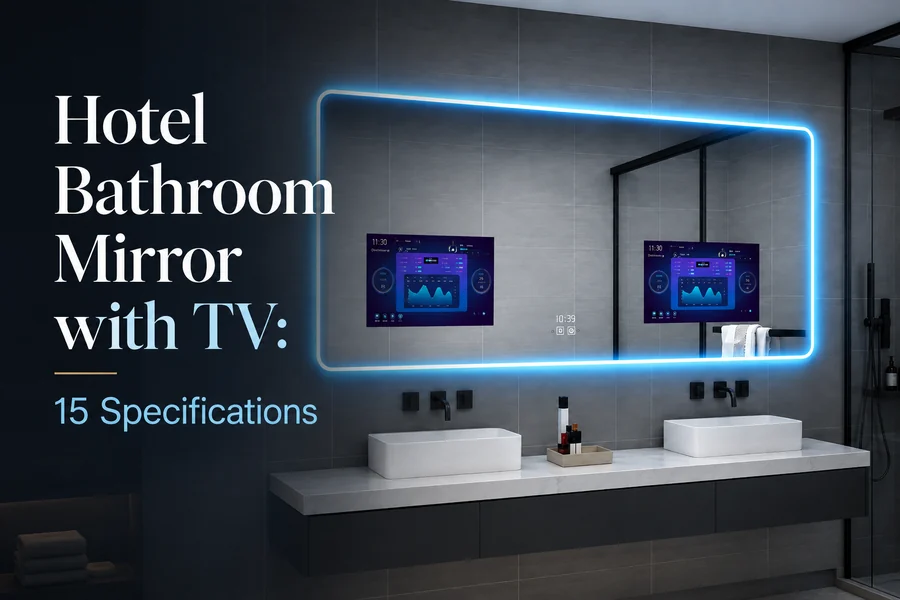
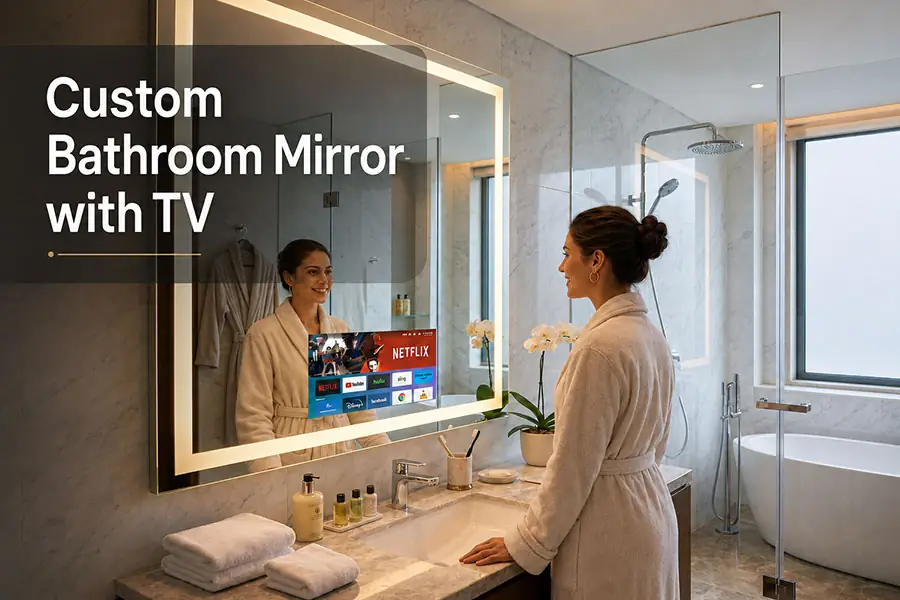
If you want more premium mirror, you can customize a Bahtroom Mirror with TV.
Read Related Article: Smart LED Bathroom Mirror with TV Built In: Buyer’s Guide
But more functions also mean more parts, more cost, and more possible after-sales issues.
The Bulgarian customer used a mixed strategy. Basic models kept the price lower. Smart mirrors gave the brand a different product level for customers who wanted more features.
This approach often makes more sense than adding every function to every mirror.

How Furniture Manufacturers Confirm LED Mirror Samples
Always approve the mirror before mass production. Test it with the matching vanity and check the full product, not just the glass.
Test the Mirror Together With the Vanity
Mount the sample above the real vanity whenever possible.
Check:
- Mirror width
- Basin position
- Faucet clearance
- Frame color
- Overall proportion
- Mounting position
A mirror can look correct on a drawing but feel wrong once it sits above the cabinet.
Approve the mirror with the vanity, not as a separate product.
Check Size, Finish, Lighting, Installation and Electrical Compliance
Use the same sample checklist for every key model.
Check:
- Exact dimensions
- Glass thickness
- Size tolerance
- Copper-free mirror coating
- Frame finish
- Light color
- Brightness
- Anti-fog function
- Touch controls
- Cable exit
- Mounting holes
- Voltage
- Required compliance documents
The Bulgarian project’s size issue showed why tolerance checks matter. Fix the final dimension in the approved sample and drawing before bulk production begins.
How to Manage Packaging and Repeat Orders
Good packaging protects the mirror during export. Good specification control makes sure the next order matches the first one.
Pack LED Mirrors for Export Shipping
Glass needs strong protection during long-distance shipping.
Common protection includes:
- Foam
- Corner guards
- Strong cartons
- Fragile marks
- Inner separation
Packaging can also follow the furniture brand’s sales plan.
In the Bulgarian project, the customer wanted plain cartons with simple fragile marks and product-size labels.
Match Mirror and Vanity SKUs
Create a clear link between each mirror and the vanity it matches.
The carton can show:
- Mirror model
- Mirror size
- Matching vanity SKU
- Local-language label
- Product image or size drawing
This helps warehouse teams, dealers, and installers pick the correct set.
Control Batch-to-Batch Consistency
Keep the same approved specification for every reorder.
Lock these items:
- Mirror dimensions
- Frame finish
- LED color
- Brightness
- Driver model
- Touch button position
- Mounting holes
- Packaging
Small changes can create problems when new mirrors must match old cabinet stock.
Plan Replacement Parts and Future Reorders
Furniture collections often stay on sale for years.
Ask the supplier how it will support:
- Replacement drivers
- LED strips
- Power supplies
- Mounting brackets
- Replacement mirrors
Keep final drawings, BOM files, finish samples, and approved packaging records.
This makes future orders much easier.
What Affects Custom LED Mirror Cost, MOQ and Lead Time
Custom LED mirror cost depends on the size, shape, frame, functions, SKU count, and sample work. A large order can still have a high unit cost if the quantity is split across many custom models.
Standard vs Custom Specifications
Standard shapes and common sizes are easier to produce.
Custom work may include:
- Irregular shapes
- Special dimensions
- Custom frames
- Special back structures
- New mounting systems
More custom work adds more setup and sample work.
Functions, Frames and SKU Quantity
Each added function changes the product cost.
Examples include:
- Metal frames
- Front and back lighting
- Anti-fog
- Bluetooth
- Digital displays
SKU count also matters.
An order of 1,000 mirrors in one size is different from 1,000 mirrors split across 20 sizes. More SKUs create more setup, packaging, and production work.
Sample Development and Bulk Production
A custom project usually follows this path:
Drawing → Sample → Revision → Pre-production sample → Bulk production
More sample changes mean more time before mass production.
Complex frames, unusual shapes, custom electronics, and special packaging can also extend the schedule.
Confirm the sample process before placing the bulk order.
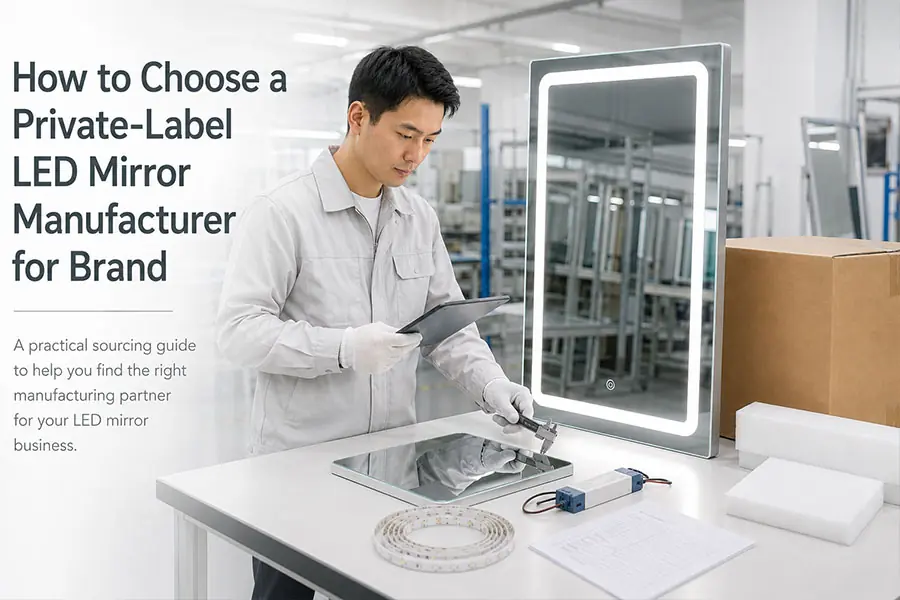
How to Choose an LED Mirror Supplier for Bathroom Furniture Production
Choose a supplier that can support product development and repeat production. Do not judge a factory only by one good sample or a low first quote.
Custom Development Capability
Check whether the factory can work from your drawings.
A suitable partner should be able to handle:
- Custom dimensions
- Custom shapes
- Frame changes
- Lighting options
- Smart functions
- Back structure changes
- Private-label packaging
A bathroom furniture factory often needs more than a ready-made stock mirror.
Quality Control, Electrical Safety and Market Certification Audit
Check how the supplier controls the product before shipment.
Review:
- Glass quality
- Size inspection
- LED aging tests
- Anti-fog testing
- Electrical parts
- IP testing
- Required market documents
For EU sales, ask for the documents that apply to the exact mirror model and functions you plan to buy.
Do not accept a certificate just because it has the right logo. Check whether it covers the product you are ordering.
Packaging and After-Sales Support
Ask what happens if mirrors break during transport or an electronic part fails later.
A supplier should have a clear plan for:
- Replacement mirrors
- Spare electronics
- Packaging changes
- Local-language manuals
- Custom labels
- Damage claims
These details matter more after the first shipment.
Long-Term Supply and Repeat-Order Stability
A factory may be able to make one good sample. That does not prove it can make the same mirror again next year.
Ask how the supplier stores:
- Approved drawings
- BOM records
- Frame samples
- Electrical specifications
- Packaging files
Shein Mirror keeps approved samples and specification records for repeat orders. The goal is to reproduce the same size, finish, lighting, and structure when a furniture customer restocks an existing vanity line.

Frequently Asked Questions
Q1: What Size LED Mirror Should Match a Bathroom Vanity?
There is no single mirror size for every vanity.
Choose the width based on the cabinet size, basin position, and available wall space. For a furniture collection, use a small group of standard mirror sizes where possible. This reduces SKUs and makes repeat orders easier.
Q2: How Many LED Mirror Sizes Does a Vanity Collection Need?
You do not need one mirror size for every vanity SKU.
Many furniture brands can use several standard mirror sizes across a larger cabinet range. The final number depends on vanity widths, sink layouts, and design style.
Q3: Can LED Mirror Frames Match Bathroom Cabinet Hardware?
Yes. Use a physical finish sample for color matching.
Send the supplier a cabinet handle, faucet sample, or finish swatch. Approve a frame sample before production. Keep that sample for future orders so later batches match the same color.
Q4: What LED Mirror Functions Should Furniture Manufacturers Choose?
Choose functions based on the product level.
Basic models may use simple lighting and anti-fog. Mid-range mirrors can add dimming and adjustable color temperature. Premium models may include Bluetooth, clocks, displays, or other smart functions.
Add features that fit your market, not every feature available.
Q5: How Can Buyers Keep Repeat LED Mirror Orders Consistent?
Keep one approved set of product records.
Store the final drawing, BOM, frame finish, LED specification, driver model, mounting position, packaging file, and golden sample.
Ask the supplier to check these records before every repeat order.
Q6: What Certifications Are Required for EU Bathroom Mirror Sales?
The required documents depend on the mirror design, electrical parts, functions, and sales market.
For EU projects, confirm the CE compliance documents that apply to the product. Also check the claimed IP rating and electrical safety test reports.
Ask the supplier for documents that match the exact mirror model you plan to import.
Conclusion
Bathroom furniture manufacturers should treat the LED mirror as part of the vanity collection, not as a separate accessory.
Start with the vanity range. Then set the mirror size, shape, finish, lighting, and electrical requirements. Test real samples with the cabinet. Approve packaging and product records before mass production. Keep those records for future orders.
This process lowers the risk of mismatched sizes, colors, lighting, and replacement parts.
For a custom project, send your vanity catalogue, drawings, target market, and expected quantity. These details give theShein Mirror LED mirror supplier enough information to build a mirror range around your furniture line.
Related Product
- Glass Factory: How Build Own High-Quality LED Mirror Brand?
- Commercial LED Bathroom Mirrors: 2026 Sourcing Guide – Shein Mirror
- Top 17 FAQs About Sourcing OEM/ODM LED Mirrors from China
- Copper Free Mirror for Bathroom Guide: Why Choose It?
- Frontlit vs. Backlit Bathroom Mirror: Which Is Better?
- 8 Common Led Illuminated Bathroom Mirror Problems
- TV Mirror for Bathrooms: How LED Mirrors with Built-In TVs
- Custom Bathroom Mirror with TV: Sizes, Lighting & Features